Support the reserve
Why donate?
The trust and the reserve rely wholly on volunteers who offer their time to help maintain and run the reserve on a day-to-day basis. Funding is drawn from donations by the general public and limited grants which help with specific projects, the trust nor the reserve has any regular income to support the reserve operations. Any donations are warmly accepted and are ringfenced for the reserve, there are regular costs the reserve has to cover and there is an endless list of works and projects we would like to see achieved subject to having the funds to do so. Please donate £5 if you can using the Paypal button above, alternatively, if you wish to donate more please use this link. or can help in other ways, please see our support page.
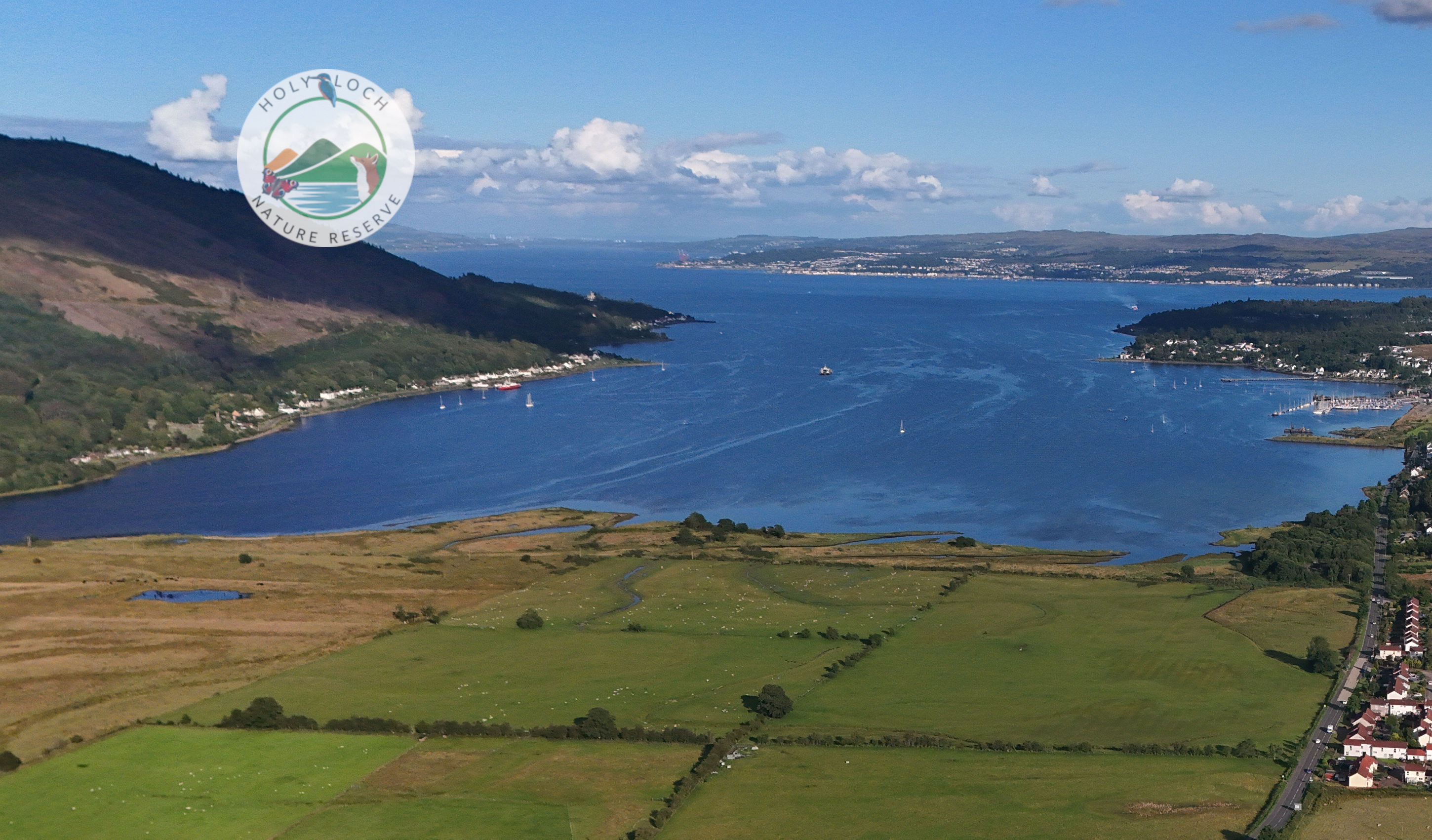
The reserve, the Holy Loch and surrounding area
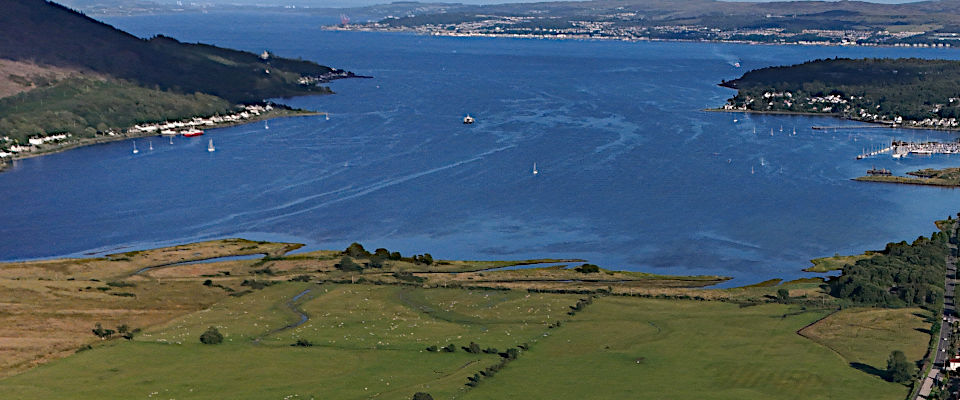
The Reserve - Imagine a Scotland far removed from today's familiar man-made landscapes.
As the last ice retreated, around 10,000 years ago, the first humans arrived, likely by boat, to a land fringed by the Atlantic. This wasn't the Scotland of bare moorland, farms, roads and monotonous conifer plantations we see today. Instead, its shores were cloaked in green, temperate rainforest, bordered by rich coastal ecosystems.
Their arrival would have been a sensory sensation. The scent of damp earth and the cacophony of unfamiliar birds and insects would have filled the air. Towering trees met the shoreline, their branches heavy with moisture, lichens, ferns and mosses. Along the coast, extensive reed beds swayed, and expansive, flat saltmarshes stretched out, merging with the land.
For these early inhabitants, the rainforest offered edible plants and animals, while reed beds and saltmarshes provided shelter, food, and other resources. Their lives became intimately connected to this dynamic landscape, shaping their culture and understanding of the world.
Today, only fragments of this ancient rainforest and these coastal wetlands remain, whispering tales of a time when humanity first encountered a land of wild beauty and abundant natural resources.
Visitors can still experience these incredible habitats at Holy Loch Nature Reserve, offering a glimpse into Scotland's primeval past.
The formal reserve area comprises around 24 acres of ungrazed coastal marsh, vegetated gravel, temperate rainforest and (damp) "carr" woodland, most of which has naturally regenerated on top of a now disused council's roads waste midden.
However, the area of interest extends across the wider saltmarsh and out into the Holy Loch itself.
The saltmarsh is intersected by several burns which flow from the hills into the Holy Loch. Over 20 small pools on the marsh support an array of water plants and animals. Some of the pools are permanent while others are ephemeral. At the highest spring tides, most of the marsh is inundated by the sea.
There is an active Facebook Page and you can follow us on Instagram.