The Holy Loch woodlands

Holy Loch Nature Reserve has a one-acre fragment of Scotland's Celtic Rainforest, where mixed, ungrazed woodland meets the tidal waters. Despite its small size, the reserve supports a complete ecosystem, layered with life from canopy to understorey, forest floor, and tidal edge. Each step through the woodland reveals subtle movements, sounds, and seasonal changes.

Woodland features

The canopy is formed by oak, ash, birch, and sycamore, creating a shifting mosaic of light and shade. Beneath, broad buckler-fern grows abundantly, a sign of the woodland's long-term continuity. Holly fills the understorey with its deep green leaves. Ivy and honeysuckle climb trees and spread across the ground, weaving through piles of leaf litter and fallen branches, which shelter countless invertebrates and fungi. White-grey lichens cover most trees, reflecting the clean air and humidity. On wet days, rain drips intermittently from leaves, while on dry sunny spring days, sunlight illuminates ferns, mosses, and understorey plants. The sound of the breeze blowing through the leafy treetops returns for yet another year.


Wildlife

Birds sing and call during the day: robins, wrens, blackbirds, and Willow Warblers and Blackcaps during the breeding season. As evening falls, Tawny and Barn Owls glide silently through the trees at night, their distinctive calls blending with the distant sounds of waders and waterfowl on the loch. In winter, Redwing, Fieldfare, and Brambling appear in the trees, their movement adding subtle animation among bare branches. Invertebrates crawl through leaf litter, mosses, and decaying logs, while fungi, including alder bracket and sulphur tuft, emerge on fallen wood. Every corner of the woodland — canopy, understorey, and floor — exhibits visible, tangible activity at all hours, changing with the light, weather, and season..
Seasonal changes

Spring: The woodland floor is carpeted with bluebells, wood-sorrel, and lesser celandine. Ferns unfurl, mosses glisten, and sunlight dapples the understorey. Occasional rain adds moisture, enhancing the richness of spring green. Birds are busy building nests and raising young.

Summer: Humid air carries the scent of honeysuckle. Ivy, holly, ferns, and mosses are at their most vibrant. Insects move through the understorey, and patches of sunlight illuminate decaying logs and woodland debris.

Autumn: Fallen leaves cover the ground, and fungi such as alder bracket and sulphur tuft appear. The woodland is animated by the return of Redwing, Fieldfare, and Brambling, while insects and other invertebrates prepare for winter.

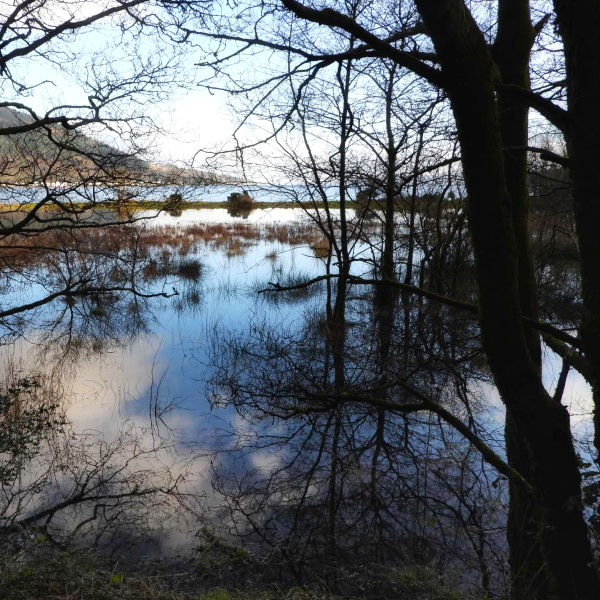
Winter: Mosses, holly, and ivy remain green. Spring tides reach the path, briefly flooding the alder-dominated woodland edge with salt water. On clear nights, the aurora may appear, shimmering over the treetops. Decaying leaves, logs, and fungi continue to provide shelter and activity for invertebrates and food for ground-feeding birds.

Water and Habitat management

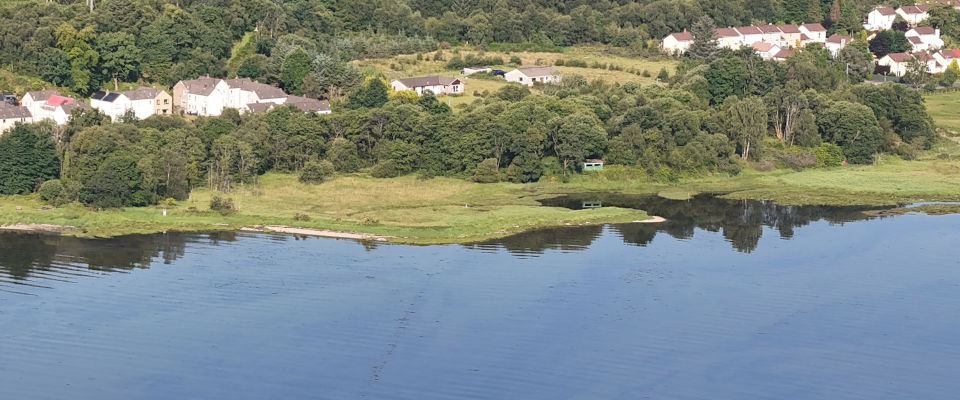
At the woodland edge, the tidal burn is dominated by alder, with some willow also present. A small woodland swamp forms where the burn is held back, brightened by yellow marsh-marigold and purple skullcap and water mint. Alder coppicing and reedbed planting improve habitat complexity, creating new opportunities for birds and invertebrates. The tidal edge is a dynamic interface, shifting with spring tides and seasonal rainwater levels, linking the woodland to the loch while supporting diverse life.


Climate change

So far, we see no signs of any obvious sustained sea level rise here. But were it to happen, then this piece of woodland is especially vulnerable to increased soil saltiness. Consequently, we encourage the natural regeneration of these rainforest tree species in more elevated areas of the woodland to allow uphill migration of this whole ecosystem out of harm's way.